



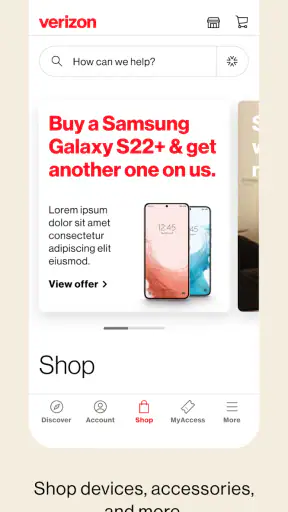


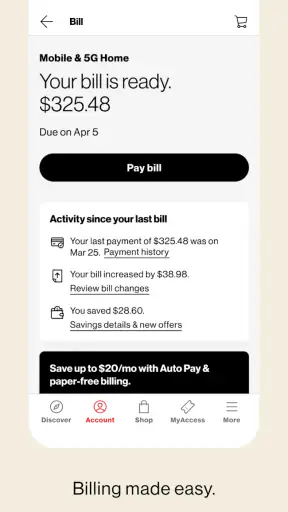
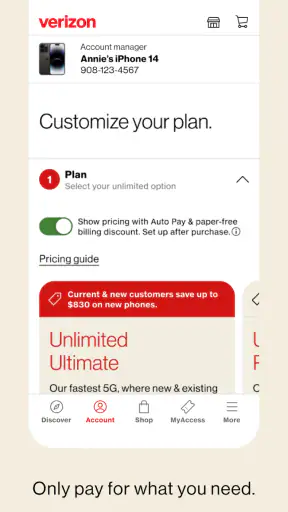
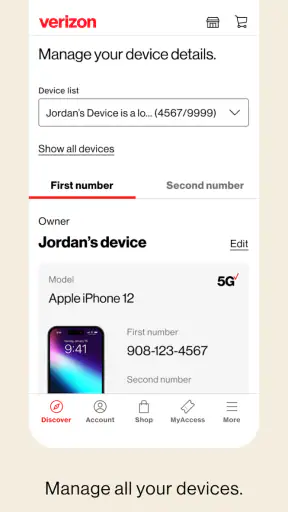

I found My Verizon most useful when I wanted one practical place for everyday Verizon account tasks rather than another app that I would open only for entertainment. It is a free lifestyle app from Verizon Consumer Group, built around managing the relationship between you and your Verizon service. That sounds simple, but it changes how I judge it: speed, stability, and clarity matter more here than flashy design. When I open it, I want to check something quickly, understand what I am seeing, and leave without turning a small account question into a long session.
The app has a 4.6 average from around 1.3 million ratings, with over 100 million installs. Those figures suggest that it has become a familiar tool for a very large number of Verizon customers. I would not treat popularity as proof that every person will enjoy using it, but it does make the app feel like a sensible first stop for customers who prefer handling routine account matters from a phone. It is also free, which removes one obvious barrier to trying it.
What the app feels like in normal daily use
My first impression is that My Verizon is designed for quick visits. I would use it when I am away from a computer and need to look at my account, review a service-related detail, or deal with a task that would otherwise require a browser. The value is not that it replaces every possible support route; the value is that it keeps Verizon-related information close at hand.
That makes it particularly convenient for people who manage more than one line or who share responsibility for a household account. A phone is often the device you already have with you when a question comes up. Instead of remembering a web address, finding a saved password, and navigating a desktop page, I can begin with the account app. The benefit is small during a calm afternoon, but more noticeable when I am traveling, changing devices, or trying to solve a service question away from home.
I also think the app works best when I approach it with a specific purpose. Opening it with a vague expectation that it will explain every billing or service issue instantly can lead to frustration. Opening it because I need to check one account detail or start one support-related task gives the experience a clearer shape. That distinction is important: this is a utility, not a general digital assistant.
Speed expectations and the cost of a quick check
For an account app, perceived speed is less about animation and more about how quickly I can reach the information I came for. My Verizon feels most effective when the opening screen gets me oriented without forcing me to search through unrelated areas. A clear starting point matters because account apps can become confusing when they present too many services, lines, and notices at once.
I would still allow for occasional waiting. Account information is not purely local content sitting on the phone; the app needs to work with Verizon’s service systems. That means a slow connection, a busy network, or a temporary service response can affect how quickly a page becomes useful. I would not blame the app for every delay, but I would notice the difference between a screen that is loading meaningful account information and one that appears unresponsive.
My practical advice is to avoid judging the app during the most inconvenient possible moment, such as while moving through a poor-signal area. If a task is important, I would open the app while connected reliably and give the relevant page time to finish loading before repeatedly tapping buttons. Repeated taps are rarely helpful in account software and can make it harder to tell whether a request has already been accepted.
The current version is 22.0.4, and the app supports Android starting with version 7.0. That broad compatibility is useful for people who keep an older phone in service, although compatibility alone does not guarantee identical performance on every device. A newer phone with more current system software will generally be the safer choice for anyone who wants the smoothest possible experience.
What happens during heavier account moments
The app is easy to evaluate when I only need a quick glance. The more revealing situations are the heavier ones: managing several lines, working through a service change, checking a complicated account situation, or moving between multiple sections in one sitting. In those moments, the app has more information to present and more opportunities for a user to lose track of where they are.
I would approach a complicated task in stages. First, I would confirm that I am looking at the correct account or line. Next, I would read the page carefully before choosing an action. Finally, I would wait for the result rather than immediately leaving the app. This workflow is not glamorous, but it reduces the risk of confusing a displayed summary with a completed change.
One useful habit is to take note of the wording on confirmation screens. Account apps often distinguish between reviewing an option, requesting an action, and completing an action. If I were making a meaningful service change, I would not rely on a quick visual impression. I would look for a clear indication that the process reached its final stage. That is a more important performance signal than whether a transition between screens feels fast.
Heavy use can also expose the difference between the app and a normal web browser. A browser may be better when I need to compare several pages side by side, copy information into another document, or keep multiple account references visible. My Verizon is better suited to a focused mobile workflow. I would choose the app for convenience and the browser for broader research or more deliberate comparison.
Reliability, recovery, and what to do after an interruption
Reliability in this kind of app means more than avoiding crashes. I also want it to recover sensibly after a weak connection, an interrupted session, or an accidental trip away from the screen. My Verizon is most dependable when I treat each important action as something to verify rather than something to assume.
If a page stalls, my first response would be to wait briefly and check the connection instead of tapping the same control several times. If the app returns to an earlier screen after an interruption, I would review the account status before starting the task again. That simple check can prevent duplicate attempts and gives me a better idea of whether the first request went through.
For a routine look at account information, this recovery behavior is manageable. For something time-sensitive, I would keep an alternative route in mind, such as using the Verizon website or contacting support through the appropriate channel. That is not a criticism unique to this app; it is a sensible precaution whenever a mobile app is being used for an account action that matters immediately.
I also prefer to keep the app updated when possible. Updates can improve compatibility and correct problems, but I would not assume that installing the newest version automatically solves every network or account issue. If the same problem appears repeatedly, I would compare the app with the browser experience. That comparison helps separate a phone-specific problem from a broader account or service problem.
Resource demands and older-device considerations
My Verizon is not the sort of app I would install for constant background entertainment. Its performance matters mainly when I open it and ask it to retrieve account information. For that reason, I would judge resource use by how comfortably it fits on my phone during short sessions, not by expecting it to behave like a lightweight calculator.
On an older device, the experience may feel less immediate when several account areas need to load or when the phone is already busy with other apps. The minimum Android requirement of 7.0 makes the app accessible to a wide range of phones, but users on older hardware should keep realistic expectations. A compatible device can still have limited memory, slower storage, or a weaker connection than a modern handset.
If the app feels sluggish, I would first close demanding apps, confirm that the phone has a stable connection, and restart the app cleanly. I would avoid clearing account-related information casually, because signing back in can create unnecessary friction. A simple restart is a better first step than making a more disruptive change.
People who use recent phones will probably care less about these constraints. People holding on to an older Android handset should consider whether they need the app often enough to justify keeping it installed. If they only check their account once in a long while, a browser may be the simpler option. If they manage Verizon service regularly, the convenience of a dedicated app can outweigh occasional delays.
Useful workflows beyond simply opening the app
The strongest way to use My Verizon is to build it into a small routine. I would open it before traveling if I expected to need account information while away from my usual computer. I would also use it when checking a service-related question immediately matters, because having the account tool already available is easier than beginning from a search engine under pressure.
For households with multiple lines, I would slow down before making any selection. The main practical risk is not necessarily that the app is difficult; it is that a busy account can make the wrong line or service look deceptively similar to the one I intended to inspect. Confirming the line first is a simple but valuable safeguard.
Another useful approach is to separate information gathering from decision-making. I would first review what the app shows, then compare that information with what I actually want to change, and only afterward continue. This is especially helpful when a service option affects more than one person in the household. The app can make access convenient, but convenience should not replace reading carefully.
I would also use the app as a first diagnostic step rather than assuming it is the final answer. If the account view clearly explains the situation, I can continue there. If the information is unclear or the process becomes repetitive, moving to a browser or human support is more sensible than spending a long time forcing a mobile workflow to do something it does not explain well.
Who will appreciate it and who should choose another route
My Verizon is a good fit for Verizon customers who prefer mobile account management, want a dedicated place for service-related tasks, and regularly handle their own line or household account. It is especially practical for people who dislike navigating a full website on a small screen. The free price also makes it easy to test without committing money.
I would be more cautious about recommending it to someone who is not a Verizon customer or who wants a general lifestyle app with broad content. Despite its category, its usefulness is closely tied to Verizon account needs. It is not a replacement for a general browser, a budgeting app, or a universal telecom manager.
I would also steer highly technical users toward the web when they need a wider view of account information or want to compare several details at once. The app wins on mobility and focus, while a browser can be more flexible for extended sessions. Neither choice is automatically better; it depends on whether the priority is quick access or a larger workspace.
Privacy expectations and the mature age label
The app carries a Mature 17+ content rating. I would not interpret that label as a promise that the app is aimed at adult entertainment. For me, it is a reminder to consider the account context and the fact that the app deals with personal service information. I would install it only on a phone I control and would be careful when opening account screens around other people.
I would also avoid treating a shared device as harmless. Even when the app is convenient, account access should be handled thoughtfully. A person who shares a phone with family members may prefer using the browser privately or signing out when appropriate. The right choice depends on how much control they have over the device, not just on how quickly the app opens.
My performance verdict after regular use
My overall view is that My Verizon succeeds when I use it as a focused account utility. Its perceived speed is acceptable for short, purposeful visits, but it should not be judged like an offline app because account pages depend on connectivity and remote service responses. During heavier tasks, careful navigation matters more than rushing. On older hardware, I would expect more variation than on a recent phone, even though Android 7.0 support keeps the door open for older devices.
The app’s biggest strength is convenience: Verizon customers can keep a dedicated route to their service account instead of relying on a browser every time. Its main weakness is the same one shared by many account tools: when a task becomes complicated or a connection is unreliable, the mobile format can feel less transparent than a larger website or direct support conversation.
With around 344 thousand written reviews and a large installed audience, it is clearly a well-established choice among Verizon users. I would recommend it to a friend who wants quick mobile access and is willing to verify important actions carefully. I would not recommend depending on it as the only option for urgent or complicated account problems. My final recommendation is simple: install it if mobile convenience is your priority, but keep the browser as a practical backup.


